How do I know if it’s fat or gynecomastia?
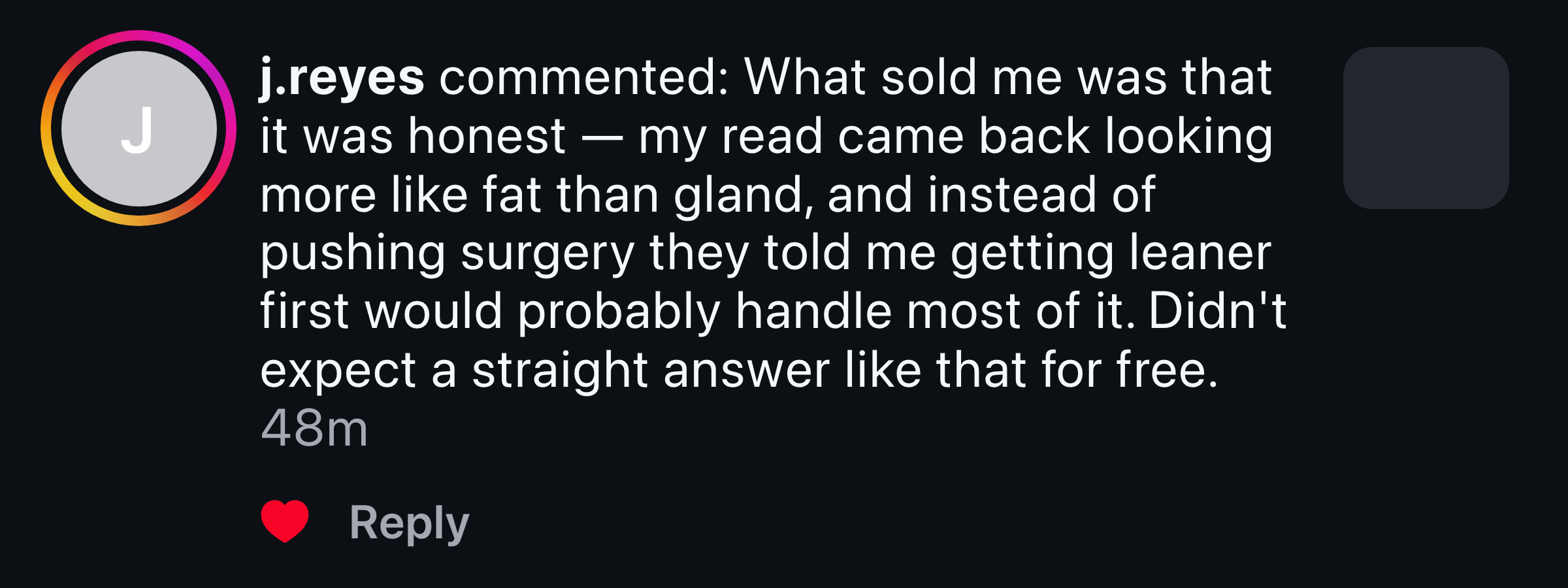
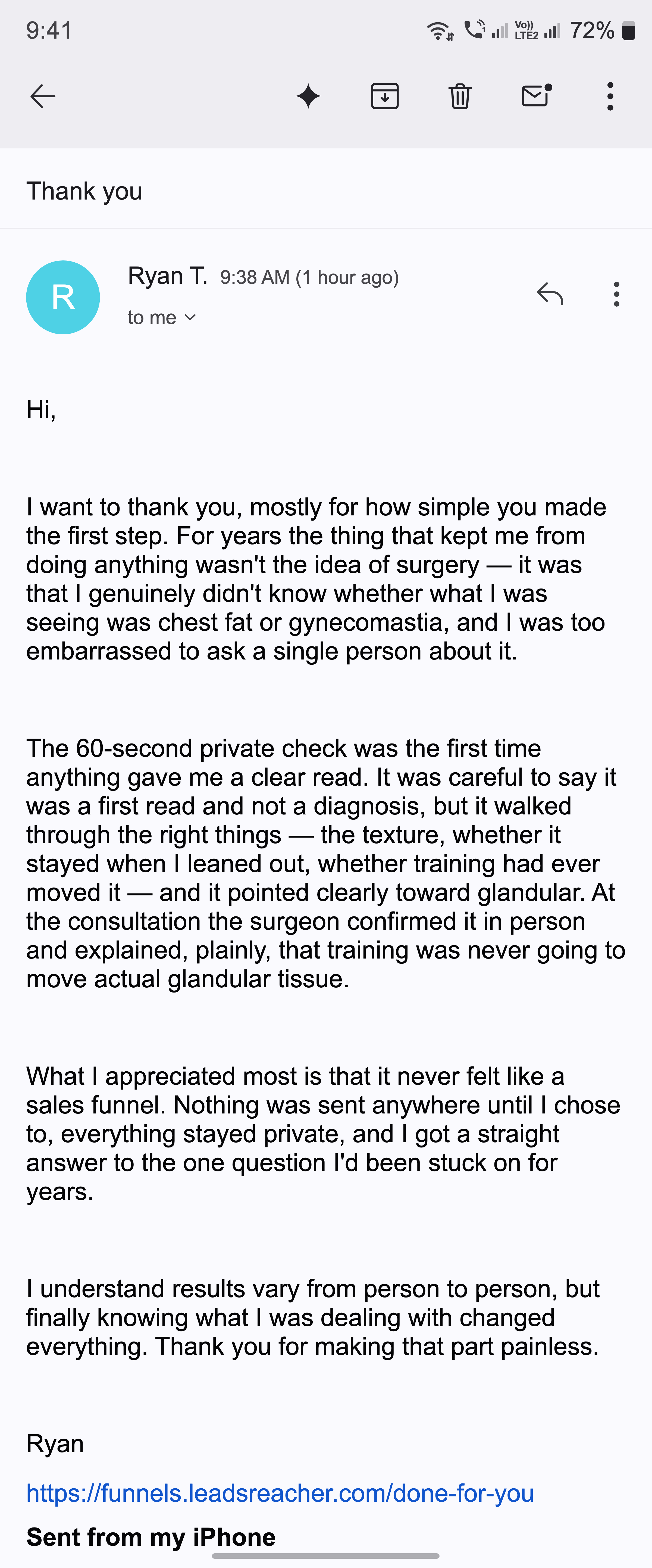
The tell is texture and behavior. True gynecomastia is a firm, rubbery disc of glandular tissue, usually right under the nipple, that stays even when the rest of you leans out and doesn’t respond to training. Chest fat is softer, more spread out, and shrinks as you lose weight. The 60-second self-check reads those signals and suggests which is more likely — it never diagnoses. A board-certified surgeon confirms whether it’s glandular or fatty in person.
Will it come back after surgery?
The glandular tissue that’s removed doesn’t grow back, so it’s honest to call it permanent removal of the treated tissue. It’s not a blanket “gone forever” guarantee, though: significant future weight gain, anabolic-steroid use or certain medications can still affect the chest. Your surgeon will be straight with you about that.
How bad are the scars?
Access is usually through a small incision at the edge of the areola (peri-areolar), where a scar hides best. Scars are real and permanent, but they fade and are designed to be discreet. The goal is a natural, masculine contour — not a scooped or obviously “operated-on” look.
Do I have to go under general anesthesia?
Not always. For suitable candidates, milder cases can be corrected awake under local anesthesia — no general, one short visit. Whether that’s right for you is a candidacy conversation, not a slogan, and your surgeon decides it with you.
How discreet is it, really?
The whole path is built for privacy: a private telehealth or in-office consult, discreet scheduling, plain unbranded garment packaging, discreet billing, and neutral-subject texts and emails that never reveal why you’re in touch. Discretion here is an operational commitment, not just a word on a page.
What will it cost, and can it be financed?
There’s deliberately no price on this page — the self-assessment is free, and its only job is to tell you what you’re likely dealing with. If your read points to glandular and you choose to go further, cost follows your grade and is discussed privately at your consultation, never as a loud headline. Simple monthly options exist through trusted partners (CareCredit, PatientFi, Cherry) as a soft-check that doesn’t affect your credit — and never a “guaranteed approval” claim, because that isn’t honest.
Is gynecomastia ever covered by insurance?
Sometimes. Persistent, painful, long-standing gynecomastia (typically Grade II–IV, present over a year, and not responding to treatment) may be considered medically necessary and, in some cases, covered. We verify your benefits and file the paperwork — but coverage depends on your plan and criteria and is never guaranteed. We never say “approved” before your plan does.
Is this surgery, or a treatment / device?
It’s surgery. Gynecomastia correction excises glandular tissue (often with liposuction) under anesthesia — or local, for candidates — in an accredited facility, by a board-certified surgeon, with a real recovery and real risks. “Precision” here means the plan is carefully measured and graded, not that it’s a device or non-invasive.
What if I’m a teenager, or it turns out to be mostly fat?
Chest changes in the teenage years are common and frequently resolve on their own as the body matures — anyone under 18 is seen with a parent or guardian, and many cases need no surgery at all. And if your read points to fat rather than gland, you’ll be told honestly: for many men, getting leaner first resolves much of it, and where a stubborn layer remains, contouring can help.
How do I even start without anyone knowing?
Start with the 60-second private self-check on this page. Nothing is sent anywhere until you choose to, all communication uses neutral subject lines, and a first consult can be a private telehealth call. You control the pace, completely.